Most readers meet a poem on the page, but almost every decision a poet makes about line breaks is a decision about sound. A break is a pause with no fixed length — shorter than a period, longer than the gap between two words — and because nobody can agree exactly how long it lasts, the reader's ear has to guess. That guess is where rhythm lives. It is also where a poet can slow a reader down, hurry them along, or pull the floor out from under a sentence at the last possible second.
You can learn to do this on purpose. What follows is the working mechanics of the break: what it does to pace, where it puts emphasis, and how to tell whether the ones you have written are doing their job.
What a Line Break Actually Does
A break does three things at once. It creates a pause in the ear. It creates a shape on the page. And it creates expectation — the reader, having arrived at the end of a line, wants to know what the next one says.
That last part is easy to forget. A line break is not a stop; it is a held breath. The word at the end of a line is followed by silence, which flatters it, and the word at the start of the next line arrives with a small push behind it. So the two most exposed positions in any poem are the end of a line and the beginning of the next. Everything between them is comparatively protected.
This is why breaks can feel like a small trick once you notice them. You can make an ordinary word feel important simply by putting it last. You can make a plain statement strange by cutting it in a place the sentence does not expect.
End-Stopped and Enjambed: The Two Basic Moves
An end-stopped line finishes where the sentence or clause finishes. The thought closes, and the reader gets a moment to stand still. A poem built from end-stopped lines feels orderly, declarative, sometimes sealed off — each line a small room with a door that shuts.
An enjambed line runs past the break, so the sentence spills into the next line. Now the reader has to carry a word like because or until across the gap and keep moving. The energy leans forward. The poem feels like it is going somewhere, and the reader is going with it.
Most poems use both. The interesting question is never which one is better, but what a particular break costs and what it buys. Look at the same sentence broken two ways:
He taught me how to leave a room
quietly.He taught me how to leave
a room quietly.
In the first, quietly is stranded on its own line, and the silence after room makes it land like an afterthought — or an admission. In the second, the word left hanging is leave, which turns a lesson in manners into something closer to abandonment. Same words. Different poem.
Pace: Line Length Is a Speed Control
A page of long lines reads like a wide road. It gathers detail, builds momentum, and can carry a sentence a long way before it lets you rest. Short lines read like stairs: each one is a step, and the reader is made conscious of taking it.
Try the same sentence three ways and read each aloud:
- They drove all night and did not speak until the river. — one line, one breath, momentum building to river.
- They drove / all night / and did not speak / until the river. — four beats, stalled, each fact isolated.
- They drove all night / and did not speak / until the river. — a long opening, then two shorter steps, then arrival.
None of these is the correct version. But they are not interchangeable either. The third gives you a natural acceleration into the last line; the second makes the silence between the two people almost audible. Choose based on what the moment needs.
Two pacing tools sit on top of line length. The first is contrast: a short line after a run of long ones lands like a slap, and a long line after a run of short ones feels like a release of pressure. The second is stanza breaks, which are to the ear roughly what paragraph breaks are to the eye — a pause long enough to let a thought settle before the next one starts.
Emphasis and Surprise: The Hinge
Because a break creates a pause, whatever sits just before it gets a little extra weight. Read down the left margin of your draft — the last words of each line — and ask whether they form a second, quieter poem. If they are all the, a, of, and, no harm done, but nothing is being emphasised either. If they are room, leave, river, quietly, the breaks are doing real work.
The most useful break of all is the hinge: the one placed immediately before the word that changes the meaning of everything above it.
Everything in the house was new
except the smell.
The first line reads as a straightforward inventory, maybe even a boast. The break lets the reader believe it. Then except arrives and the poem turns. Had the line run on — Everything in the house was new except the smell — the turn would still be there, but the reader would see it coming. The break buys you a half-second of being wrong, and a half-second is a lot.
Exercises to Train Your Ear
- Break one sentence five ways. Write a single sentence of about fifteen words. Copy it five times, breaking it at a different point each time. Read all five aloud, slowly. One or two will feel wrong, one will feel dull, and one will surprise you. Keep that one and work out why.
- Read the right margin. Take a poem you have finished and read only the last word of each line, top to bottom. If the sequence reads as a kind of ghost summary, your breaks are carrying meaning. If it reads as noise, some of them are probably accidental.
- Un-line a poem you love. Type a favourite poem out as prose, then re-line it yourself without looking at the original. Compare. The places where you differ are the places where that poet made a choice you would not have made — which is exactly what you want to study.
- Shift the speed. Write twelve lines on one subject with the first six deliberately short and the last six deliberately long. Then reverse it. Notice which version suits the subject and which fights it.
- Pause on purpose. Read your draft aloud and hold a full beat at every break, no matter what the grammar says. Any break that feels absurd when you do this is probably in the wrong place.
A Revision Pass Devoted to Breaks
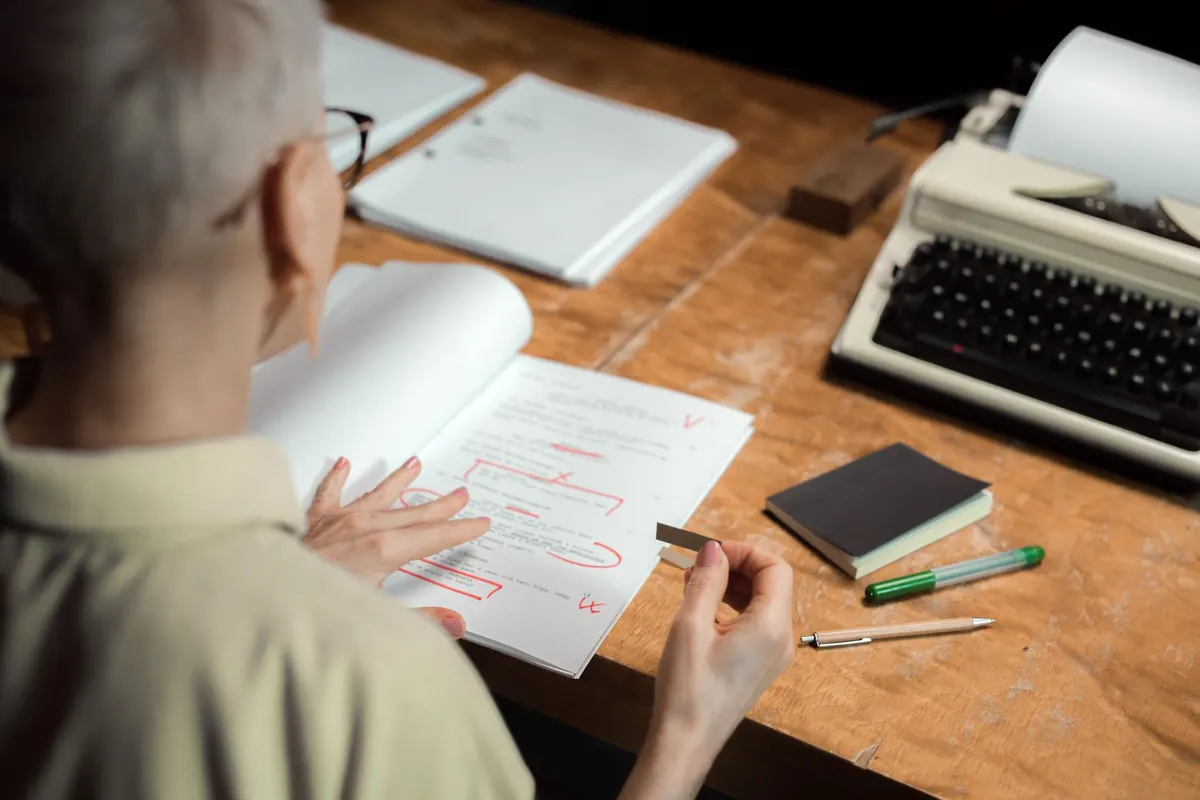
Set aside one draft and change nothing except where the lines end. Read it aloud first and mark every point where you actually breathe. Where you breathe but the line does not break, ask why. Where the line breaks but you do not breathe, ask harder — those are the breaks that exist for the page rather than the ear.
Then check the left margin for a column of weak words. A stack of the, a, and, of at the ends of lines usually signals breaks made by accident, when the line simply ran out of room. Sometimes a dangling article is exactly the suspense you want; usually it is not.
Finally, resist the urge to break for neatness. A ragged right margin is not a flaw, and stretching a line to reach some imagined edge will cost you the pause you needed. The break is the smallest decision available in a poem and the one readers feel most directly. Make it on purpose, every time, and the poem will sound like someone meant it.
Photo: pasja1000 / Pixabay