Thirty minutes is not a lot of time. It is also, for most writers, enough to produce something that did not exist before you sat down: a scene with a beginning and an end, a page of an essay that finally says what you meant, the opening of a chapter you have been circling for a week. The trick is not to write well for thirty minutes. The trick is to write at all, on purpose, with a clock running and no permission to stop and fix things.
What follows is a drafting sprint you can run today, with a pen or in a document, alone or alongside other people. It has three parts: setup, the sprint itself, and a short review that takes less time than making tea. Nothing here requires special software or a particular kind of desk. It requires a timer, one decision, and a willingness to keep your hands moving while your inner editor waits in the hall.
Why the Clock Helps
Left alone, most of us write in a loop: a sentence, a judgement, a rewrite, a doubt. The loop is not stupid — it is how a final draft gets clean — but it is a poor way to make a first draft, because a first draft's job is to exist, not to be correct.
A short timer interrupts the loop. It gives the judging part of your brain a scheduled appointment later in the day, which is often all it needs to quiet down. Thirty minutes is short enough to feel trivial and long enough to get somewhere. It also has an end, and writers work strangely well when a thing has an end.
The other benefit is size. A thirty-minute sprint produces a sprint-sized draft: roughly 400 to 900 words for most people, fewer if the sentences are hard. That is a scene. That is a section. That is enough to have a next step.
Before the Clock Starts
Setup is where most sprints are won or lost, and it takes about five minutes. Do these five things in order.
- Name one target. Not "work on the novel." Something you could hand to another person: "the argument in the kitchen," "the paragraph where she explains why she left," "the opening 300 words." Write it at the top of the document, then forget it.
- Write one sentence of intent. A single line saying what this chunk should do — "get Mara from the bus station to the flat and let the argument start." It is scaffolding, not literature. Delete it later.
- Clear the surface. Close the tabs you are not using. Put the phone out of reach, face down, on silent. If you write on a laptop, close the mail client rather than minimising it; minimised things still call.
- Set the timer where you can see it. A kitchen timer, a phone across the room, an online stopwatch. Visible matters more than loud, because glancing at a clock is less disruptive than being startled by one.
- Decide how you will stop. This sounds fussy and is not. If you know that at the thirty-minute mark you will write half a sentence and leave it unfinished, you will not spend the last five minutes tidying.
One optional extra: keep a scrap page beside you marked "parking." Anything that arrives uninvited — a doubt about the timeline, a fact to check, a better name for the dog — goes there in three words and stays there until the timer rings.
The Thirty Minutes
Minutes 1–5: Start Ugly
Begin with the sentence before the one you are excited about. If you know the scene's best line is "I never asked you to stay," start with the ten seconds leading up to it. That removes the pressure of the brilliant opening and puts you inside the material immediately. Some writers simply retype the last paragraph they wrote. It is mechanical, it requires no decisions, and by the second sentence the hands have remembered how to work.
Minutes 6–25: Keep the Pen Moving
This is the part that feels like writing, and the part most people skip. Rules for the middle:
- No deleting. Not a word. If a sentence goes wrong, write the correction after it and keep going.
- No research. The parking page exists for this. "Check the tide times" is a note, not a task.
- Use placeholders. Bracket what you do not know: [name of the street], [something about the mother], [50 words describing the room]. Brackets keep the shape of the gap without stopping to fill it.
- When you hit a wall, lower the stakes. Write the plainest possible version — "He was angry. He said something cruel" — and move on. You can make it beautiful on a later pass, when you are not paying for every word with your momentum.
- Write "and then" if you must. It is a bridge, not a crime. Bridges get you to the next real sentence.
Minutes 26–30: Mark, Don't Fix
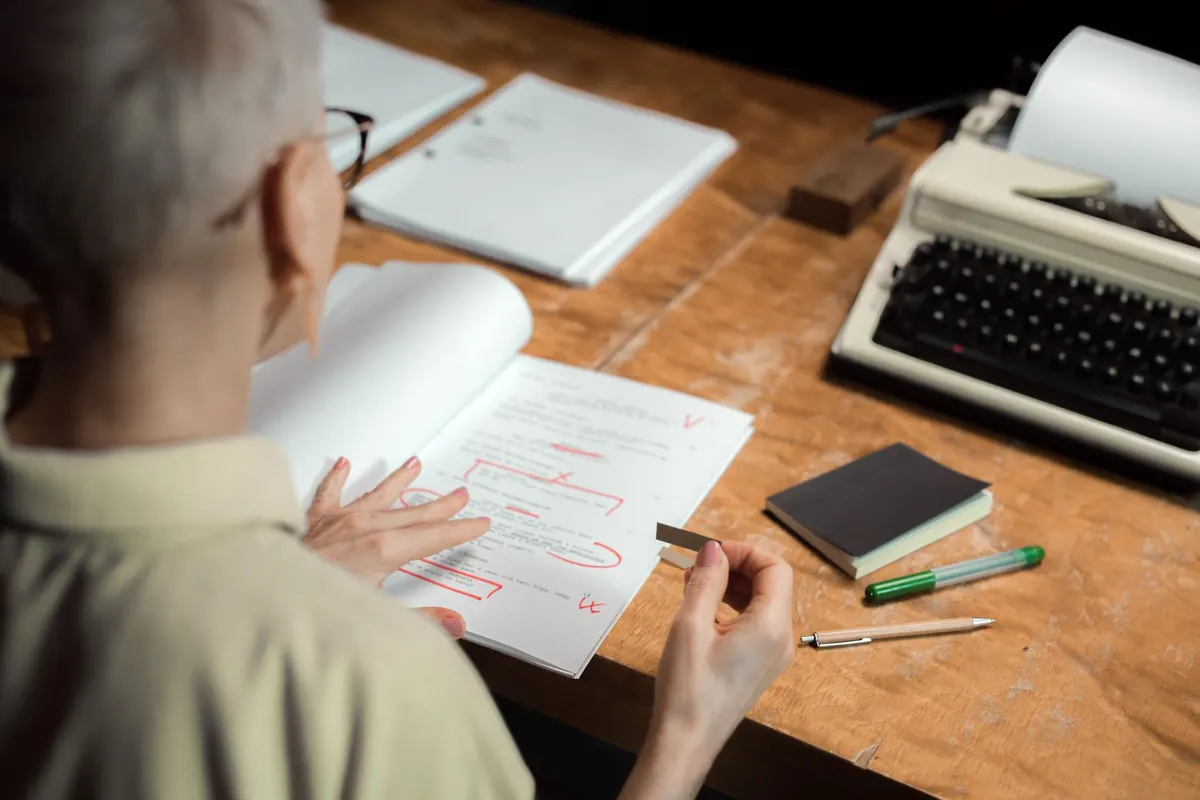
In the last five minutes, stop pushing forward and read over what you have made, pen in hand. Do not correct commas. Make three marks instead:
- A tick beside any line that surprised you, or that you would not have written yesterday.
- A squiggle where you lost the thread or skipped something.
- One sentence at the end saying where the next sprint should begin.
That last mark is the most valuable thing you will write all day. Tomorrow's version of you will not remember where you were going; leave a note.
The Light Review
A sprint gets words down. A short review makes the next sprint easier. Ten minutes is plenty, and it is not the same activity as editing.
Read the whole chunk once, quickly, as if it belonged to someone else. Then answer three questions in the margin.
- What is actually happening here? If you cannot say it in one sentence, the draft is doing two things at once, and the next sprint should split them.
- Where did the energy drop? Usually at a spot where you explained something the reader could have watched.
- What is the strongest line? Copy it to the top of the document. It is a reminder that the session worked.
Resist fixing anything beyond a typo. An early tidying pass makes a draft feel finished before it is, and finished-feeling drafts are harder to tear open again.
Making It Repeatable
The sprint works better the second and third time for a boring reason: you stop having to invent the session. Keep the same length, the same time of day if you can, the same seat. Keep a running log of one line per sprint — date, target, and the sentence you left for tomorrow. Three weeks of that log is an honest record of your working life, and a far better motivator than a word count.
Some days the thirty minutes will produce 700 usable words. Some days it will produce a page of complaints and one good image. Both count. The point is not efficiency; it is being in the room, with the clock running, often enough that the work accumulates.
Begin With One Sprint
Pick a target now, before you close this page. One scene, one section, one paragraph you have been avoiding. Write a sentence of intent, set the timer, and start with the line before the good one.
Then stop when it rings. Mark the surprises, note where tomorrow begins, and leave the draft alone. Thirty minutes, a page, a next step — that is a working day for a draft, and it is repeatable.
Photo: Nile / Pixabay